
< img height="1" width="1" style="display:none" src="https://www.facebook.com/tr?id=2550434715461330&ev=PageView&noscript=1" />

Box Type Substation

Prefabricated Box Type Substations for Outdoor Power Distribution & Renewable Energy Integration


Urban expansion and heavy industrial installations require compact, factory-integrated power distribution systems that bypass the construction time of traditional brick-built substations. This prefabricated box-type substation line integrates high-voltage switchgear, a power transformer, and low-voltage distribution switchboards into a unified, weather-resistant enclosure.

Engineered for primary and secondary distribution at 10kV, 20kV, and 35kV classes, units are pre-wired, pre-tested, and delivered to site as a plug-and-play assembly. Enclosure designs comply with IEC 62271-202 standards, isolating high-voltage, transformer, and low-voltage compartments to ensure operational safety and streamline field installation timelines.

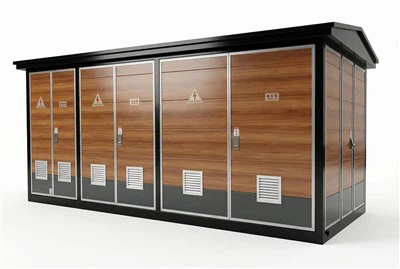


Prefabricated Substation


Product Types and Configurations

European-Style Box Substations (Split-Compartment Type)
Configuration: Enclosure divided into three distinct, physically separated compartments for high-voltage switchgear, the power transformer, and low-voltage switchboards.

Characteristics: Walk-in or maintenance-aisle configurations enabling internal service access during inclement weather, highly customizable primary/secondary schematics, and robust structural isolation between heat-generating transformers and switching equipment.


American-Style Box Substations (Combined / Pad-Mounted Type)
Configuration: Low-profile, integrated design where the transformer tank and high-voltage load-break switches share a common enclosure or oil-filled compartment.

Characteristics: Extremely compact footprint, minimized visual impact for urban residential developments, dead-front bushing construction for enhanced public safety, and loop-feed switching capability.


Wind & Solar Skid-Mounted Substation Units
Configuration: Heavy-duty base frame supporting step-up transformers, ring main units (RMU), and inverter integration interfaces for renewable energy farms.

Characteristics: Engineered for harsh outdoor environmental extremes, high vibration withstand for transport to remote sites, and optimized for high-temperature continuous full-load operation.


Technical Specifications


Technical Parameter

Standard Specification Range

Rated Primary Voltage

10 kV, 20 kV, 35 kV

Rated Secondary Voltage

0.4 kV (or custom multi-voltage outputs)

Transformer Capacity

50 kVA to 3,150 kVA (Cast Resin or Oil-Immersed options)

Rated Frequency

50 Hz / 60 Hz

High-Voltage Switchgear

SF6 Gas-Insulated Switchgear (GIS) or Air-Insulated Load Break Switches / RMU

Low-Voltage Switchgear

Fixed or withdrawable circuit breaker panels with smart metering

Enclosure Protection

IP54 / IP65 (Dust-tight and protected against water splashing/jets)

Enclosure Material

Aluminum-zinc coated steel plate, stainless steel, or composite sandwich panels

Ventilation System

Natural convection or intelligent forced-air cooling with thermostat control

Internal Arc Classification

IAC AFLR 20kA 1s (Seismic and pressure relief compliant)


Design and Construction
 
01/

Enclosure Structural Framework: Fabricated from corrosion-resistant aluminum-zinc (Al-Zn) steel sheets or structural steel skeletons welded with precision CNC laser-cut profiles. Exterior surfaces undergo multi-stage phosphating, electrostatic powder coating, and anti-UV treatment to withstand coastal salt spray and high solar radiation environments.

02/

Compartmentalization & Safety Interlocks: High-voltage, transformer, and low-voltage sections feature mechanical and electrical five-prevention interlocks (preventing misoperation of load break switches, grounding switches, and circuit breakers) combined with dedicated pressure relief flaps for internal arc mitigation.

03/

Thermal Insulation & Climate Control: Walls utilize double-layer sandwich panel construction filled with fire-retardant rock wool or polyurethane foam. Integrated thermal management systems incorporate automatic louver dampers, heating resistors for anti-condensation, and high-capacity exhaust fans.

04/

Busbar & Cabling Architecture: High-conductivity electrolytic copper busbars with heat-shrinkable insulation sleeves are arranged with optimized clearance distances. Cable entry and exit ports are sealed with waterproof gland plates located at the floor base.


Applications

Urban Residential & Commercial Areas: High-density apartment complexes, shopping malls, and municipal street lighting networks requiring aesthetic, low-noise, and compact footprint substations.


Renewable Energy Generation: Solar photovoltaic (PV) generation fields and wind energy farms requiring centralized or decentralized step-up transformation near string or central inverters.


Industrial Parks & Manufacturing Plants: Factory shop floor expansions, auxiliary plant distribution, and heavy-duty motor drive substations.


Infrastructure & Transportation: Highway service areas, railway tunnel auxiliary power networks, and airport lighting distribution grids.


Temporary Construction & Remote Sites: Oil and gas exploration camps, open-pit mines, and disaster recovery temporary power supply hubs.

Compact Substation


Manufacturing and Quality Control
 

CNC Sheet Metal Fabrication

Automated laser cutting, turret punching, and robotic bending cells ensure precise dimensional tolerances for modular enclosure panels and door frames.

Welding and Surface Treatment

Shielded metal arc and laser welding executed by certified operators, followed by automated shot-blasting and high-temperature powder baking lines to guarantee paint adhesion and rust resistance.

Busbar Processing & Assembly

Computer-controlled copper busbar punching, bending, and torque-calibrated bolting stations ensure precise electrical contact resistance.

In-Process Electrical Wiring

Secondary control wiring harness assembly, terminal block labeling, and functional simulation testing of protective relay panels prior to primary integration.


Custom Transformer Solutions
 

Standard modular box substation enclosures do not match every regional utility grid code or restrictive plot size. Custom engineering services provide tailored adaptations:

Geographical & Environmental Adaptation

Special seismic reinforcement, high-altitude dielectric compensation, tropical anti-mold treatments, or desert sand-filter louver configurations.

Electrical Schema Integration

Custom integration of specific third-party protection relays (e.g., Schneider, ABB, Siemens), remote terminal units (RTU) for SCADA telemetry, and multi-circuit low-voltage outgoing feeder configurations.

Dimensional & Aesthetic Modifications

Low-profile configurations for underground or restricted height clearance locations, alongside custom RAL color matching or brick/stone texture architectural cladding to blend with surrounding real estate.


Testing and Documentation


Every complete box-type substation undergoes rigorous routine and functional testing before dispatch. Factory Acceptance Testing (FAT) documentation package includes:


Mechanical Operation Tests: Verification of door latches, mechanical interlocks, ventilation louvers, and switchgear operating handles.


Dielectric Withstand Voltage Tests: Power-frequency high-voltage tests on main circuits and auxiliary control circuits.


Main Circuit Resistance Measurement: Verification of low resistance across all busbar and switch contacts.


Functional Secondary Control Test: Verification of protective relay tripping logic, alarm signals, telemetry, and remote control loops.


Transformer Routine Tests: Winding resistance, voltage ratio, vector group, load loss, and no-load loss verification (when transformer is factory-integrated).


Protection Degree Verification: Inspection of enclosure sealing integrity confirming IP54/IP65 ratings.


Factory Test Report (FAT Dossier): Comprehensive data package supplied with shipment containing all calibration certificates, wiring schematics, and conformity documents.


Packaging and Delivery

Transport Preparation

Critical internal components (such as withdrawable breakers or sensitive relays) are locked or individually cushioned. Enclosure doors are secured with heavy-duty transit seals.

Lifting & Rigging Provisions

Base frames are engineered with integrated forklift channels and certified corner lifting lugs rated for crane hoisting during site positioning.

Weatherproof Protection

Substation units are wrapped in multi-layer heavy-duty polyethylene shrink film with moisture-absorbing desiccant bags placed inside compartments to prevent transit corrosion during ocean freight.


Report on Product Qualifications


productcate-1-1
productcate-1-1
productcate-1-1
productcate-1-1
productcate-1-1
productcate-1-1
productcate-1-1
productcate-1-1
productcate-1-1


FAQ


Q: What is the typical lead time for standard versus customized prefabricated box substations?

A: Standard catalog box substations (such as 10kV units up to 1250kVA with standard RMU and LV distribution configurations) typically require 3 to 4 weeks of production time. Highly customized units featuring specific regional utility switchgear brands, non-standard dimensions, or complex SCADA requirements require 6 to 8 weeks, subject to engineering schematic approval.

Q: How is internal temperature regulated inside outdoor box substations during extreme weather?

A: Temperature control relies on a combination of passive and active measures. Enclosures feature double-wall sandwich panels with thermal insulation. Internal climate is managed by automatic temperature controllers linked to roof or wall exhaust fans and louvered dampers that activate when internal thresholds are exceeded, while internal anti-condensation heaters prevent moisture accumulation during cold night cycles.

Q: Are box-type substations suitable for coastal or high-salt spray environments?

A: Yes, provided the correct material specification is selected. For coastal or corrosive chemical environments, enclosures are fabricated from marine-grade aluminum-zinc steel or stainless steel, treated with specialized anti-corrosion primer layers and exterior UV-resistant powder coatings to ensure a multi-year service life without structural degradation.

Q: What civil foundation work is required prior to installing a box substation?

A: Site preparation requires a reinforced concrete foundation pad constructed in accordance with the manufacturer's certified civil outline drawing. The foundation must include pre-set cable trenches, conduit entry sleeves for incoming high-voltage and outgoing low-voltage cables, and a flat, leveled surface to ensure proper load distribution and enclosure alignment.

Q: Can these substations be integrated with remote monitoring (SCADA) systems?

A: Yes. Low-voltage and high-voltage compartments can be equipped with intelligent power meters, communication gateways (supporting protocols such as Modbus, IEC 60870-5-104, or DNP3), and motorized breaker actuators to enable seamless integration with remote SCADA or distribution automation systems.

Q: What technical documents are delivered along with the substation?

A: Each shipment includes a complete technical dossier comprising the Factory Acceptance Test (FAT) report, general arrangement and civil foundation layout drawings, electrical schematic and wiring diagrams, component operation and maintenance manuals, and certificates of conformity.

As one of the most experienced box type substation manufacturers and suppliers in China, we also support customized service. Please rest assured to wholesale bulk high quality box type substation in stock here from our factory. Contact us for more details.

European box Variables, Combined transformer substation, box type substation

(0/10)

clearall